Musketeers of the Guard
The Musketeers of the Guard, the elite military corps commanded by Monsieur de Treville, serve as the king's personal bodyguard and the central institution around which the adventures of d'Artagnan, Athos, Porthos, and Aramis revolve. The corps embodies a unique blend of fierce loyalty to the crown, reckless bravery, and insubordinate camaraderie, making it both a formidable fighting force and a constant source of friction with Cardinal Richelieu's rival guards.
Identity and Establishment
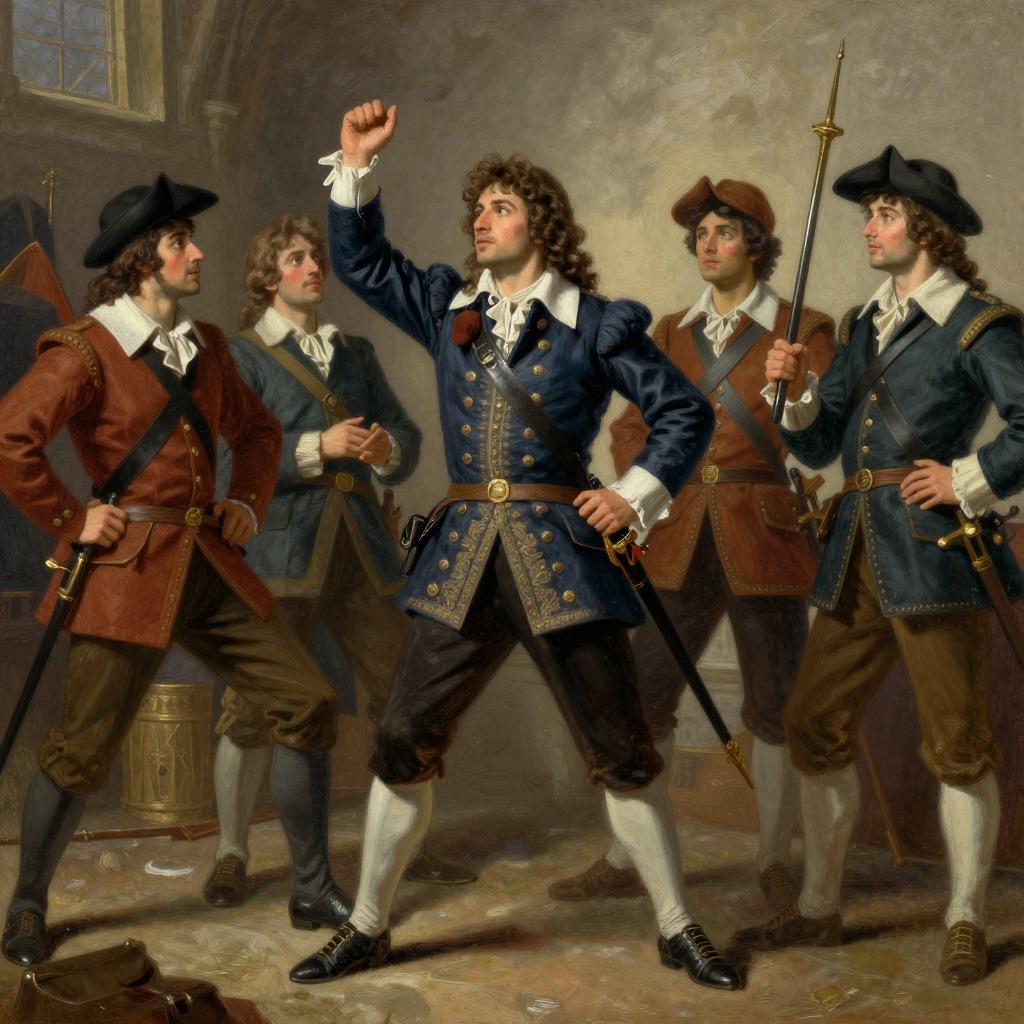
The Musketeers of the Guard were established by King Louis XIII, who, according to the memoirs of the period, had a real liking for Treville—a royal, self-interested liking. The king surrounded himself with this formidable and chosen body, which was to him in devotedness, or rather in fanaticism, what his Ordinaries had been to Henry III and his Scotch Guard to Louis XI. Treville, who had himself begun life without a sou but with a fund of audacity, shrewdness, and intelligence, became the captain of the Musketeers. His soldiers formed a legion of devil-may-care fellows, perfectly undisciplined toward all but himself. They were loose, half-drunk, imposing, and spread themselves about in cabarets, public walks, and public sports, shouting, twisting their mustaches, and clanking their swords, taking great pleasure in annoying the Guards of the cardinal whenever they could fall in with them.
Structure and Culture
The corps was characterized by a unique internal culture of fierce independence and mutual loyalty. The Musketeers were known to be enemies of the cardinal and were beloved on account of the hatred they bore to his Eminence. They were recruited from among the first gentlemen of the kingdom. Treville understood admirably the war method of that period, in which he who could not live at the expense of the enemy must live at the expense of his compatriots. The Musketeers were known to draw in the open streets, as if it were the best of all possible sports; sometimes killed, but sure in that case to be both wept and avenged; often killing others, but then certain of not rotting in prison, M. de Treville being there to claim them. They trembled before him like scholars before their master, obedient to his least word, and ready to sacrifice themselves to wash out the smallest insult.
Key Members and Their Roles
The most celebrated members of the corps during the period of the narrative are the three inseparable friends: Athos, Porthos, and Aramis, who are later joined by d'Artagnan. Athos is a noble and distinguished gentleman of great personal beauty and intelligence, though given to profound melancholy. Porthos is a vain, strong, and boastful Musketeer, known for his love of fine clothes and good living. Aramis is a mild, amiable, and scholarly Musketeer who secretly aspires to enter the Church. These three, along with d'Artagnan, form a powerful brotherhood, swearing the famous motto "All for one, one for all." Their friendship and combined skill make them a formidable force, capable of challenging even the cardinal's most trusted agents.
Conflicts and Rivalries
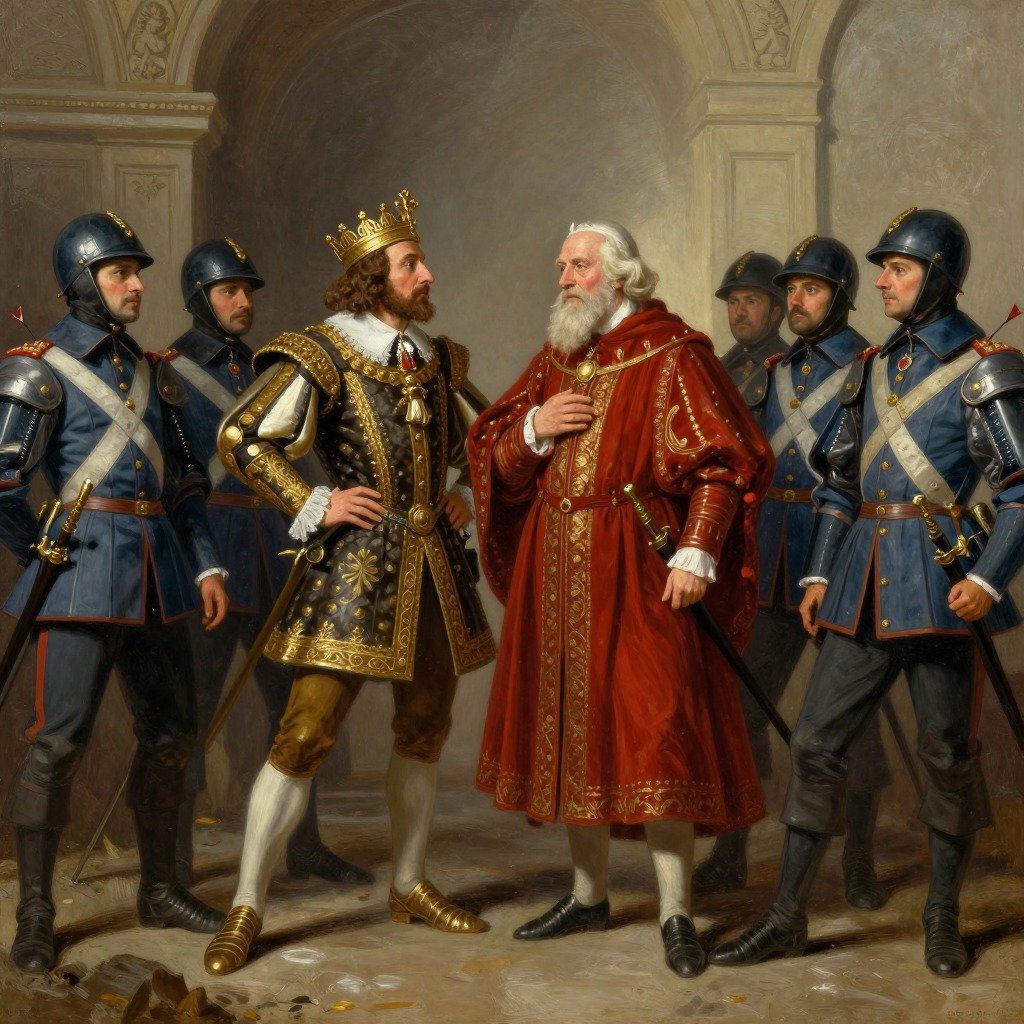
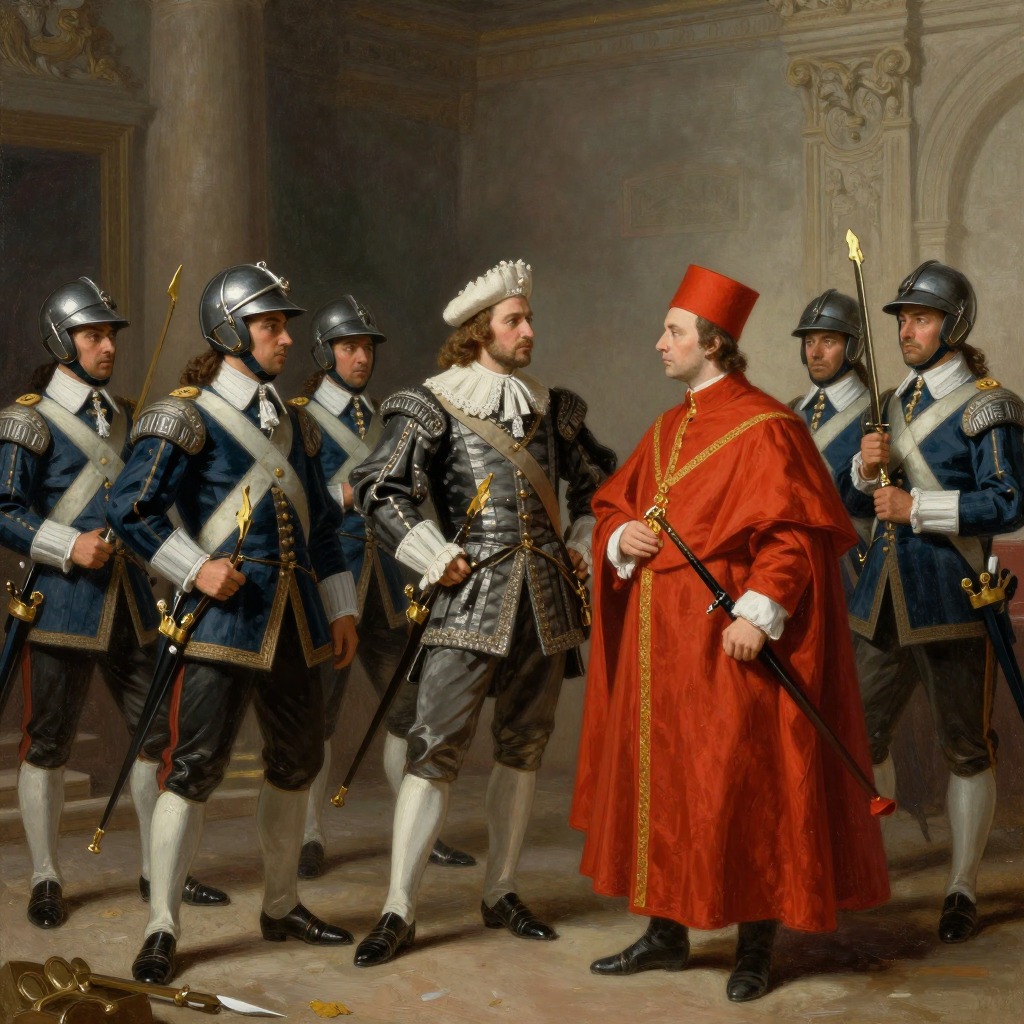
The Musketeers' primary institutional rival is the Cardinal's Guards, a corps created by Richelieu to counterbalance the king's elite force. The two groups are in a state of constant, low-grade warfare, with the king and cardinal secretly encouraging their men to quarrel. This rivalry erupts into open combat on several occasions, most notably in the famous battle near the Carmes-Deschaux, where d'Artagnan, Athos, Porthos, and Aramis defeat five of the cardinal's Guardsmen, including the formidable Jussac. This victory establishes the four friends' reputation and solidifies their bond. The Musketeers' loyalty to the king and their hatred of the cardinal place them at the center of the political and romantic intrigues that drive the plot, including the affair of the queen's diamond studs and the protection of the Duke of Buckingham.
Narrative and Thematic Significance
The Musketeers of the Guard function as the primary vehicle for the novel's exploration of honor, friendship, and loyalty. The corps represents a space where individual merit and courage can triumph over birth and political favor. D'Artagnan's ultimate goal throughout the novel is to join their ranks, a dream he achieves only after proving his worth through a series of dangerous exploits. The corps' internal code of honor, which values bravery and loyalty above all else, stands in stark contrast to the Machiavellian politics of Cardinal Richelieu. The Musketeers' willingness to defy the cardinal's authority in the service of the queen and their friends makes them the embodiment of a romantic ideal of chivalry in a world of political calculation.